
How to Service a Water Heater: A Step-by-Step Guide for Homeowners in Dubai
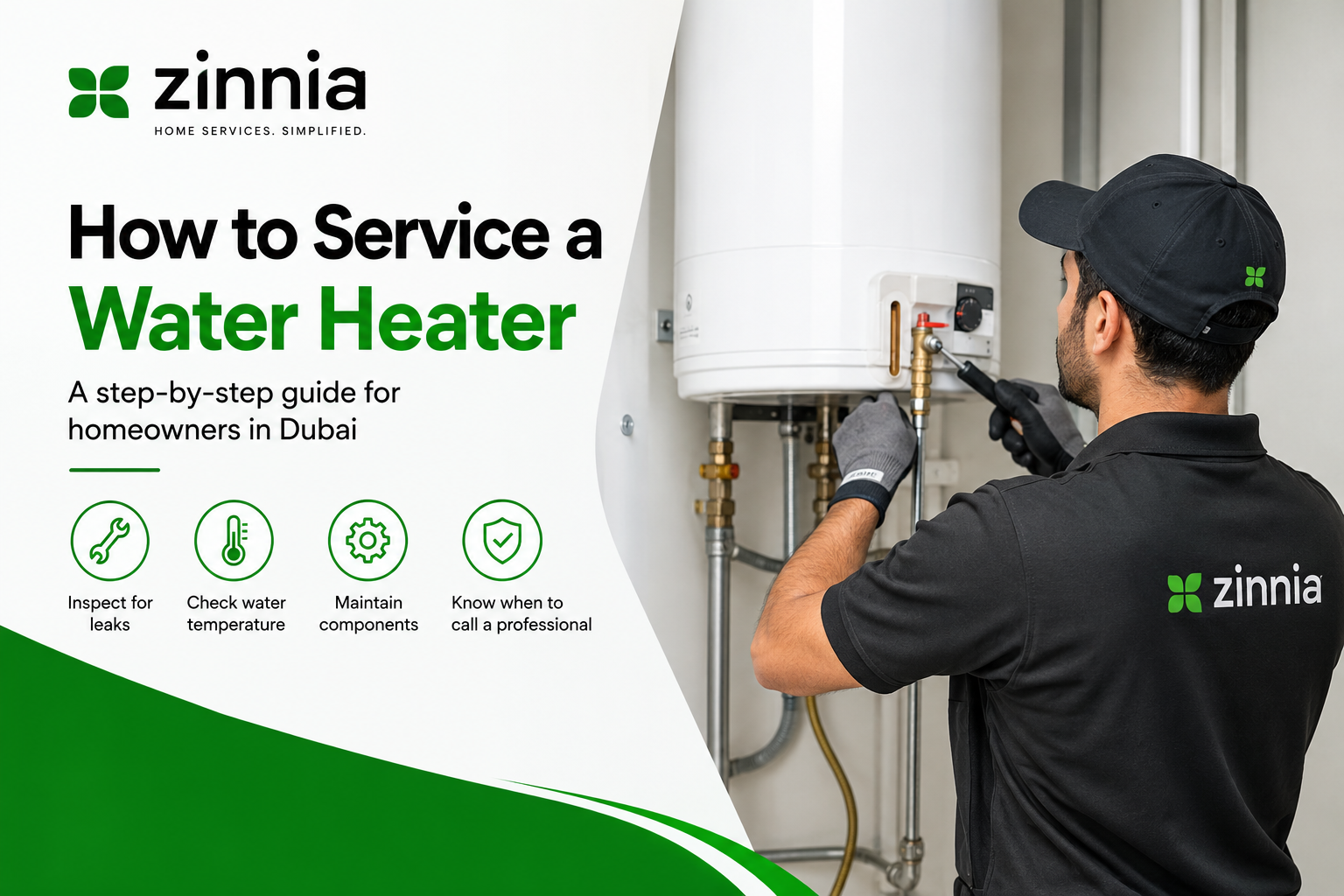
Knowing how to service a water heater helps you maintain a reliable hot water supply, identify early signs of damage, and reduce the risk of unexpected breakdowns. Regular maintenance includes checking for leaks, inspecting visible connections, monitoring water temperature, and arranging professional inspections when necessary. In Dubai, where hot water systems are used in apartments and villas throughout the year, proper water heater maintenance is an important part of home care.
Although homeowners can perform basic visual checks, tasks involving electricity, pressurized water, internal components, or safety valves should be handled by a qualified technician. This guide explains how to maintain your water heater, which warning signs to look for, and when to contact a professional plumbing service in Dubai.
Why Is Regular Water Heater Maintenance Important?
Regular water heater maintenance helps identify potential problems before they develop into expensive repairs. A well-maintained system can provide more consistent hot water, operate as intended, and remain in service longer when its components are in good condition.
Maintenance is particularly important when a water heater shows signs of wear, develops unusual noises, or takes longer than usual to heat water.
The main benefits of routine water heater servicing include:
Early problem detection: Identifying leaks, corrosion, and damaged connections before they cause further damage.-
Reliable hot water: Checking whether the heater maintains a consistent temperature and heats water properly.-
Improved operating efficiency: Addressing sediment buildup and faulty components when maintenance is appropriate.-
Greater safety: Identifying potential electrical, pressure, and overheating issues.
Better maintenance planning: Understanding when repairs or replacement may be necessary.The correct maintenance routine depends on whether your property uses an electric storage water heater, an instantaneous system, or another type of water-heating equipment.
How to Service a Water Heater: 6 Essential Steps
Servicing a water heater involves inspecting its condition, checking its operation, and maintaining its components according to the manufacturer's instructions.
The following steps explain what homeowners can safely check and which tasks require professional assistance.
1. Inspect the Water Heater for Leaks
Start with a visual inspection of the area around your water heater. Look for water stains, damp flooring, dripping connections, rust marks, or moisture around the tank and nearby pipes.
1. Check visible plumbing connections without removing covers or dismantling any components. A small leak can indicate a loose connection, a faulty valve, or damage to the tank. If water is coming from the tank itself, corrosion may have compromised its integrity. In this situation, replacing the heater may be more appropriate than attempting a repair.
What to do: If you notice significant leakage, stop using the heater and isolate its water and power supplies if you can do so safely. Never touch wet electrical equipment. Contact a qualified plumbing technician to investigate the cause.
2. Check the Water Temperature Inconsistent water temperature can indicate a problem with the thermostat, heating element, or another part of the water heater. Notice whether the water takes longer to heat, becomes unexpectedly cold, or is much hotter than usual. These symptoms can help a technician identify the underlying fault. Avoid adjusting unfamiliar controls or opening the heater's electrical compartment. Excessively hot water can cause scalding, while incorrect temperature settings can affect the system's safe operation.
What to do: Follow the manufacturer's recommended temperature settings. If the water overheats or fluctuates significantly, arrange a professional inspection.
3. Check Visible Pipes and Connections: Water heater maintenance should include checking accessible pipes, fittings, and valves for signs of deterioration. Look for corrosion, mineral deposits, damaged insulation, and moisture around visible connections. Do not tighten fittings blindly, as excessive force can damage connections or make a leak worse. In Dubai properties, plumbing systems can experience mineral deposits associated with water quality. The significance of these deposits depends on the water supply, the equipment, and the operating conditions.
What to do: Have damaged fittings, leaking connections, or suspected internal blockages assessed by a qualified technician.
4. Check for Unusual Noises: Popping, rumbling, or other unusual sounds from a storage water heater may indicate sediment accumulation or another internal problem. Over time, deposits can collect inside some tanks and interfere with normal operation. However, not every noise has the same cause, so a technician should assess persistent or worsening sounds.
What to do: If the heater becomes unusually noisy, takes longer to heat water, or shows other signs of malfunction, arrange a professional inspection. Do not open the tank or attempt to flush a hot, pressurized system without the correct equipment and procedure.
5. Arrange Professional Inspection of Safety Components: Water heaters have safety components designed to help control temperature and pressure. Depending on the model, these may include a temperature and pressure relief valve, thermostats, electrical protection, and other manufacturer-specified devices. These components should be inspected and maintained according to the manufacturer's instructions and applicable requirements.
Never block a relief valve discharge pipe, disable a safety device, or attempt to test a valve without understanding the manufacturer's prescribed procedure.
What to do: Ask a qualified technician to inspect the relevant safety components during scheduled water heater maintenance, particularly if the unit is older or has shown signs of malfunction.
6. Schedule Internal Cleaning When Required: Some water heaters require periodic flushing or internal maintenance to manage sediment buildup. The appropriate procedure depends on the design of the heater and the manufacturer's guidance. Tank flushing, heating-element descaling, and internal component replacement are not suitable DIY tasks for inexperienced homeowners. The water may be extremely hot, the tank may retain pressure, and electrical components must be isolated correctly.
What to do: Ask a professional whether your water heater needs flushing, descaling, or other internal maintenance. The technician can recommend an appropriate schedule based on the model, usage, and observed condition.
How Often Should You Service a Water Heater in Dubai?
The ideal water heater maintenance schedule depends on the manufacturer's recommendations, the type of equipment, household usage, and local operating conditions. There is no single interval that is appropriate for every water heater. A practical maintenance routine includes regular visual checks by the homeowner and professional servicing at the interval recommended for the particular unit.
Maintenance task
Check for visible leaks or moisture - Periodically and whenever you notice a change
Monitor hot water temperature - Regularly during normal use
Inspect visible pipes and connections -During routine home checks
Inspect safety components - According to the manufacturer's instructions and applicable requirements
Flush or descale the system - Only when appropriate for the model and recommended by the manufacturer
Arrange a professional inspection - At the recommended service interval or when symptoms develop
If your water heater is producing inconsistent hot water, making unusual noises, leaking, or repeatedly tripping an electrical circuit, do not wait for the next scheduled maintenance visit.
Should You Service or Replace Your Water Heater?
Whether to repair or replace a water heater depends on the cause of the problem, the unit's age and condition, and the cost of the required work. Servicing or repair may be appropriate when the tank is structurally sound and the issue involves a replaceable component, such as a thermostat, heating element, valve, or connection.
Replacement may be the better choice when the storage tank has developed a corrosion-related leak, faults occur repeatedly, compatible parts are unavailable, or repairs are no longer economical.
A professional assessment can help you compare the available options and determine the most practical solution for your property.
When Should You Call a Professional Water Heater Service in Dubai?
Homeowners can perform basic visual checks, but water heater servicing often involves electrical systems, hot water, pressurized tanks, and safety devices. These components require the correct training, tools, and procedures.
Professional assistance is recommended when:
- The heater stops producing hot water.
- You suspect a faulty thermostat or heating element.
- A pipe, valve, or tank is leaking.
- The unit makes persistent unusual noises.
- Internal cleaning or descaling is required.
- The heater needs installation, replacement, or safety checks.
For installation, repairs, and routine maintenance, explore Zinnia's plumbing and water heater services in Dubai. A professional assessment can help identify the cause of a problem and determine the appropriate next steps for your water heater.
Frequently Asked Questions about Water Heater Maintenance
Keep Your Hot Water System in Good Condition
Regular water heater maintenance can help you identify developing problems, maintain reliable hot water, and plan repairs before a minor fault becomes a larger issue. Start with basic visual checks, follow the manufacturer's maintenance guidance, and leave electrical work and internal servicing to qualified professionals.
If your water heater needs inspection, repair, installation, or replacement, contact Zinnia to discuss your requirements. Visit our plumbing and water heater services page in Dubai to explore the available solutions for your home.